

What Exactly Is a Zero-Emission Vehicle?
A Zero-Emission Vehicle (ZEV) is any vehicle that doesn’t produce pollution from its tailpipe. Instead of gasoline or diesel, ZEVs use electricity or hydrogen, which helps keep Canada’s air cleaner and healthier.
Canada wants all new cars and trucks sold by 2035 to be zero-emission. This means you’ll see many more ZEVs on the road soon. As these vehicles become common, it’s important to understand the new words and terms that come with them.
This guide clearly explains ZEV terms, making it easy for everyone to choose cleaner, affordable ways to drive.
Why ZEV Terminology Matters to Canadians
Understanding ZEV terms makes it easier for Canadians to:
- Choose the Right Vehicle: Knowing the difference between different types of ZEVs helps match a vehicle to your driving needs.
- Understand Charging Options: Knowing the types of chargers and plugs helps you plan where and how to charge your vehicle.
- Talk with Confidence: Whether you’re asking questions at a dealership or talking with friends, knowing the terms makes conversations easier.
- Get the Most from Incentives: Recognizing what counts as a ZEV helps you qualify for available rebates and savings.
- Plan for the Future: With Canada phasing out gas-powered cars by 2035, knowing ZEV terms helps you stay ahead.
- Support a Cleaner Canada: Every informed decision brings us closer to better air and a healthier planet.
Types of ZEVs and Hybrids:
There are several types of Zero-Emission Vehicles, and each one works a little differently. Some are small and perfect for short city trips, while others are full-sized cars or trucks that run without polluting the air. Here are the five main types of ZEVs you’ll hear about most often:
| Type of ZEV | Acronym | Description | How it Moves | Emissions | Typical Range | Ideal Use |
| Micro-Mobility | E-bikes & E-scooters | Small, lightweight vehicles for short trips | Small rechargeable battery | None | 20–80 km | Short urban trips, first-mile/last-mile commuting |
| Battery Electric Vehicle | BEV | Fully electric vehicle powered by a rechargeable battery | Large rechargeable battery packs | None | 300–600 km | Daily commuting, general driving, families |
| Plug-in Hybrid Electric Vehicle | PHEV | Combines electric motor with gasoline engine | Battery (electric) and gasoline | Low on short trips, moderate when using gasoline | 40–80 km electric, 500+ km gasoline total | Mixed-use driving, longer trips, rural areas |
| Hybrid Electric Vehicle | HEV | Uses gasoline engine assisted by electric motor; battery charges by braking | Gasoline and small electric motor | Lower than standard gas vehicle, but not zero | 500+ km (gasoline) | Drivers without charging access |
| Hydrogen Fuel Cell Vehicle | FCV | Electric vehicle powered by hydrogen fuel cells | Compressed hydrogen gas | Only water vapour | 500–700 km | Long-haul driving, fleet vehicles, buses |
Quick note on HEVs: Standard hybrids (HEV) save fuel but still burn gasoline and do not count toward Canada’s 2035 ZEV target.
ZEV Types Explained
Battery Electric Vehicle (BEV)
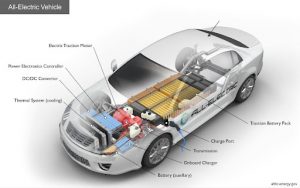
A Battery Electric Vehicle (BEV) runs entirely on electricity stored in large batteries. BEVs must be plugged into chargers, either at home or at public charging stations.
Examples:
- Tesla Model 3
- Chevrolet Bolt
- Hyundai Ioniq 5
Advantages of BEVs:
- Zero Tailpipe Emissions: Greatly reduce environmental impact.
- Lower Fuel Costs: Charging an electric vehicle typically costs far less than buying gasoline.
- Minimal Maintenance: No oil changes, exhaust systems, or spark plugs required.
Plug-In Hybrid Electric Vehicle (PHEV)
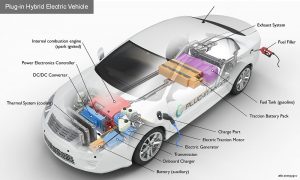
A Plug-In Hybrid Electric Vehicle (PHEV) combines a rechargeable battery and electric motor with a traditional gasoline engine. PHEVs operate entirely on electric power for short trips, then switch to gasoline power for longer journeys.
Examples:
- Toyota RAV4 Prime
- Mitsubishi Outlander PHEV
- Ford Escape PHEV
Advantages of PHEVs:
- Flexibility: Ideal for drivers who regularly travel long distances or who live in rural areas without reliable charging infrastructure.
- Lower Emissions: Significantly reduce emissions compared to traditional vehicles when frequently charged.
- Fuel Savings: Reduced gas consumption lowers overall costs.
Hybrid Electric Vehicle (HEV)
A Hybrid Electric Vehicle (HEV) pairs a gasoline engine with a small electric motor. The battery charges itself automatically through regenerative braking, and the car never needs to be plugged in.
Examples:
- Toyota Prius
- Honda Accord Hybrid
Advantages of HEVs:
- Fuel Efficiency: Provides significant fuel savings compared to traditional gasoline cars.
- Convenience: No need to charge from an external source.
- Reduced Emissions: Less pollution than conventional vehicles, but still uses gasoline.
Hydrogen Fuel Cell Vehicle (FCV)
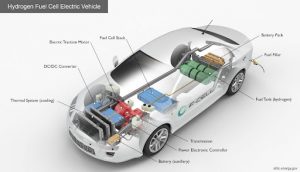
A Hydrogen Fuel Cell Vehicle (FCV) uses compressed hydrogen gas and converts it into electricity inside a fuel cell to power an electric motor. The only emission is water vapor, making FCVs entirely pollution-free at the tailpipe.
Examples:
- Toyota Mirai
- Hyundai NEXO
Advantages of FCVs:
- Quick Refueling: Similar speed to filling a gas tank, approximately five minutes.
- Long Range: Typically travel longer distances than battery-electric vehicles between refuels.
- Clean Operation: Emit only water vapor, supporting environmental goals.
Internal Combustion Engine (ICE)
The traditional vehicle type, an Internal Combustion Engine (ICE) uses gasoline or diesel fuel exclusively. ICE vehicles do not qualify as zero-emission and will be phased out under Canada’s 2035 targets.
Duty Classes: ZEVs For Every Size and Job
Zero-Emission Vehicles aren’t just limited to cars. They come in all shapes and sizes, from small scooters to big transport trucks. Each type of vehicle falls into a different duty class, based on its size and how it’s used. Here’s a quick look at how ZEV technology is being used across different types of vehicles, from personal rides to heavy haulers.
- Micro-Mobility (E-Bikes & Scooters): Small electric vehicles ideal for short city trips, reducing congestion and emissions.
- Light-Duty Vehicles (Cars & SUVs): The main focus of government incentives and consumer adoption, ideal for everyday driving.
- Medium-Duty Vehicles (Delivery Vans & Trucks): Commonly electric-powered to maximize efficiency, particularly for frequent stop-and-go city routes.
- Heavy-Duty Vehicles (Buses & Freight Trucks): Critical for reducing pollution on high-use routes; often hydrogen-powered or equipped with large electric batteries.
| Vehicle Class | Common Examples | Best Technology | Benefits |
| Micro-mobility | E-bikes, scooters | BEV | Reduces congestion; ideal for short trips |
| Light-duty | Cars, SUVs, pickups | BEV, PHEV | Largest market; core focus of incentives |
| Medium – duty | Delivery vans, trucks | BEV | Significant emission reduction in cities |
| Heavy-duty | Transit buses, long-haul trucks | BEV (local), FCV (long-distance) | Major environmental impact on busy routes |
Charging Basics
Just like gas-powered (ICE) vehicles need the right type of fuel whether it’s regular, premium, or diesel, Zero-Emission Vehicles (ZEVs) need the right kind of charger or refueling system. Not all chargers are the same, and knowing which ones your vehicle uses is key to keeping it powered and ready to go. Different ZEVs use different types of charging plugs, speeds, and even fuels like hydrogen. It’s important to understand what’s available near your home, work, or along your driving routes so you can choose a vehicle that fits your lifestyle. Here’s a simple overview of the main charging and refueling options you should know about.
- Level 1 (120V): Standard household plug, slowest charging, ideal for overnight home charging.
- Level 2 (240V): Common home, office, and public charging stations; fully charges most EVs overnight.
- Level 3 – DC Fast Charging: High-speed public chargers along highways, typically adding hundreds of kilometers of range in less than 30 minutes.
- NACS (North American Charging Standard): The new standard connector type adopted by most automakers from 2025 onward, simplifying charging infrastructure.
- Hydrogen Stations: Limited but growing availability, essential for FCV drivers to refuel rapidly.
| Charging Type | Voltage/Power | Typical Charging Time | Common Locations | Best For |
| Level 1 | 120 V | 20-40 hrs | Home garages, driveways (regular wall outlet) | Overnight charging for short daily drives |
| Level 2 | 208-240 V | 4-8 hrs | Homes (with special installation), workplaces, public lots | Daily charging, full overnight top-ups |
| Level 3 (DC Fast Charge) | 480 V | 20-40 minutes | Highway rest stops, shopping centres, public charging hubs | Long road trips and quick top-ups |
| Hydrogen Fueling | 700 – bar pressure | 5 minutes | Select stations (BC, Quebec, Alberta) | Hydrogen fuel cell vehicles |
Conclusion
Understanding Zero-Emission Vehicle (ZEV) terminology isn’t just about learning new words, it’s about feeling confident as Canada moves toward a cleaner future. Whether you’re looking to buy an electric vehicle, apply for a rebate, or simply want to understand what’s happening on the roads around you, knowing these terms helps you make smart, informed choices.
From charging levels to vehicle types and energy sources, every term gives you a clearer picture of how ZEVs work and how they fit into your daily life. As more Canadians make the switch to electric and hydrogen-powered vehicles, being familiar with this language means you’re ready to drive forward with the future. Below is a full glossary of terms to help you stay informed.
ZEV Glossary
Understanding these words will help you feel more confident when talking about electric vehicles, asking questions at a dealership, or making choices about what to buy. As Canada moves toward a cleaner, low-emissions future, being informed means you’re already part of the change.
ZEV Terms and What They Mean
Term |
What It Means |
ZEV (Zero-Emission Vehicle) |
A vehicle that doesn’t release any pollution from its tailpipe. It runs on electricity or hydrogen, not gas or diesel. |
BEV (Battery Electric Vehicle) |
A fully electric car that plugs in to charge and has no gas engine. It produces zero emissions. |
PHEV (Plug-in Hybrid Electric Vehicle) |
A car that runs on electricity for short trips and uses gas for longer ones. It plugs in to charge. |
HEV (Hybrid Electric Vehicle) |
A car with a gas engine and a small battery. The battery charges itself while driving (no plug needed). |
FCV (Fuel Cell Electric Vehicle) |
A car that runs on hydrogen. It turns hydrogen into electricity and only gives off water from the exhaust. |
Environment & Energy Terms
Term |
What It Means |
Greenhouse Gases (GHGs) |
Pollutants like carbon dioxide (CO₂) that trap heat in Earth’s atmosphere and cause climate change. Switching to ZEVs can help cut these down. |
Lifetime Carbon Footprint |
The total amount of pollution a car creates from building it, fueling it, and driving it over its life. |
Renewable Energy |
Energy that comes from sources that won’t run out—like the sun, wind, or water. |
Non-Renewable Energy |
Energy that comes from sources that can run out, like oil, gas, and coal. These also produce more pollution. |
Vehicle Range |
How far a vehicle can drive on a full charge (or full tank for hydrogen vehicles). More range means fewer stops. |
Battery & Power Terms
Term |
What It Means |
Watt (W) |
A unit that shows how much energy is being used right now (like a lightbulb). |
Kilowatt (kW) |
Equal to 1,000 watts. Used to measure how much power an EV motor or charger can deliver. |
Kilowatt-hour (kWh) |
Measures how much energy a battery can store. Bigger number = longer driving range. |
Charging Terms
Term |
What It Means |
Level 1 Charger |
Uses a regular home outlet (120V). Slowest charging—great for overnight use. |
Level 2 Charger |
Uses a special 240V outlet (like a dryer). Charges faster—found at home or public stations. |
Level 3 Charger (DC Fast Charging) |
Super-fast charging, found along highways and in cities. Charges most EVs in under an hour. |
Charging Connector (Plug) |
The plug that connects the car to the charger. Different vehicles use different types (like CCS, NACS, or CHAdeMO). |